

Tyre ply rating is a measurement that’s also referred to as tyre load range. It tells you what type of load your vehicle’s tyres can handle when inflated at the maximum recommended air pressure. It can be found on the tyre sidewall.
This number is usually indicated either on a sticker affixed to the driver-side door jamb, on the edge of the driver side door, or sometimes on the gas filler door. And your car manual.
Only vehicles that have a built in Tyre Pressure Monitoring System will warn you that your tyre air pressure is low. It is recommended to check the air pressure on your vehicle on a monthly basis.
You should check it when the tyre is cold. The tyre pressure can be checked at any time of the day as long as the tyres have been sitting for a few hours or haven’t been driven for more than a few miles. When you do check your tyre pressure, remember to check all four tyres on your vehicle and also your spare tyre. Sometimes the spare tyre also has a sensor.
TPMS stands for Tyre Pressure Monitoring System. TPMS is an electronic system in your vehicle that uses TPMS sensors to monitor the air pressure in your tyres. It warns you that your tyre is under-inflated and creating it unsafe for driving.
Some cars are equipped with a tyre reset switch. If your vehicle doesn’t have one, you will need to drive around for a few minutes and your TPMS light will remove on its own.
If the light still remains after you have had all five tyres with the correct tyre pressure then one of the sensors may be faulty and would need to be replaced
Our Tyre warranty covers Manufacturer’s Defect for the life of the tyre (up to the wear marker). The tyre must be inspected by Tyre Center of Belize Tyre Technician before issuing any warranty. Warranty does not cover Road Hazard nor Improper maintenance of tyre.
The tyre could be out of balance. You would need to inspect the tyre for any bulges and uneven wear. Also, if you have any wheel weights on the tyre or if your rim is bent.
Shake all four tyres and make sure none of the suspension or steering components are loose. An example would be if you have something like a bad inner or outer tie rod that’s excessive. Most of the times the vibration is due to the tyre balancing.
You should check your owner’s manual. Tyre Rotation depends on whether your vehicle is a front-wheel drive, rear-wheel drive, or all wheel drive.
For both front and rear-wheel drive vehicles it is recommended to rotate your tyres every 5,000 to 7,500 miles. For All wheel-drive vehicles it is recommended that tyre rotation be done more frequently. Usually, 3,000 to 5,000 miles.
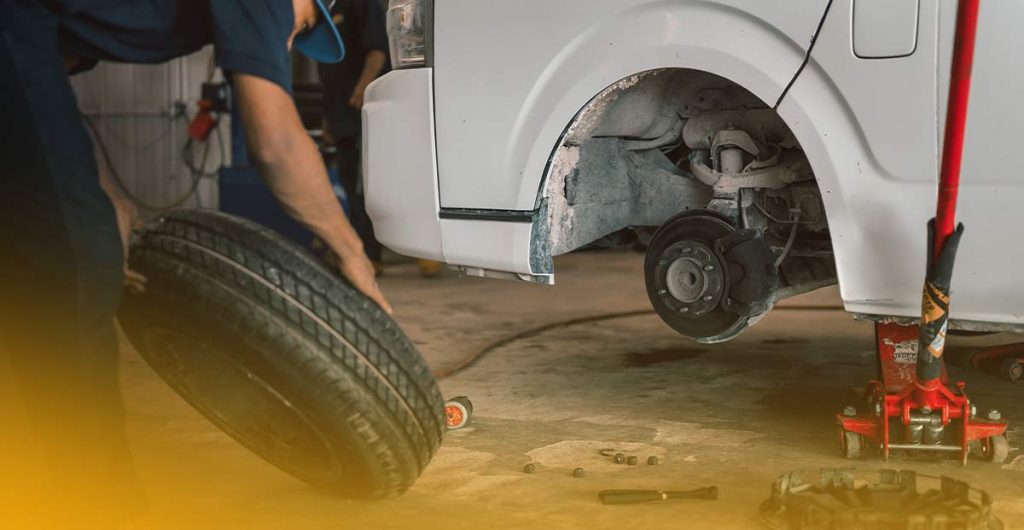
You’ll need: a spare tyre, scissors jack, tyre iron/lug wrench and the key for locking lug nuts.
- Find a safe spot to pull over
- Turn on your hazard lights
- Make sure your vehicle is on the park position
- Lift your hand brake. You do not want the vehicle to be moving while you are changing the tyre.
- If you cannot move the vehicle away from the road then gather a few branches and place it at a certain distance away from your vehicle in both directions so that other drivers are warned.
- Make sure your spare tyre is in good condition before removing the flat tyre.
- You will need to remove the cover from the rim.
- Use the lug wrench to loosen the lug nuts
- Use the jack to lift the vehicle off the ground
- Remove the lug nuts and pull the tyre off the vehicle
- Place the spare on the car
- Screw on the lug nuts and tighten them a bit using the lug wrench
- Lower the vehicle to the ground
- Tighten the lug nuts to the maximum possible
Vehicles need Wheel Alignment to avoid: Uneven Tyre wear, Vehicle Pulling, Off Center Steering wheel, Vibrations or shaking and poor handling & stability.
- Extend the life of your car
- Save yourself from the inconvenience of breakdowns and repairs
- Better engine performance: Oil changes help keep the internal moving parts of your engine clean and lubricated, allowing for a smoother, quieter ride.
- Keeps dirt and debris from building up: Old oil will have a certain amount of debris and junk in it, which can damage parts of your engine. Changing the oil and the filters will help to keep these dirty little particles out of your engine, and protect your engine’s vital components from their harm.
- Better MPG: Who would say no to better gas mileage? By improving lubrication, new, clean oil reduces friction that can slow down your engine and have you visiting the pump more often.
- Less harmful emissions: Older cars and trucks sometimes burn old, dirty oil, causing an excess of noxious engine emissions. Fresh oil is less likely to burn and better able to absorb particles, making your vehicle pollute much less.
- Extended engine life: Your vehicle will last much longer on the road if you get the oil changed regularly. Keeping the oil clean and fresh is the best way to lubricate and protect your engine, keeping critical parts free from harmful debris, boosting performance and guarding against the most common causes for engine wear and breakdown.
Its important to follow your vehicle manual to schedule your oil change. Oil change intervals depends on a few factors: the age of your vehicle, the type of oil and the driving conditions.
Oil change was recommended every 3,000 miles but with today’s modern lubricants that has changed. Newer vehicles have recommended oil change intervals of 5,000 to 7,500 miles.
Our batteries have a 24 months warranty as from date of purchase on Manufacturer Defect Batteries. The battery must be tested for a (24) hour analysis to verify that indeed the battery is defected due to Manufacturer. The vehicle on which the battery is being used must be brought in for inspection.
If your battery tests to be faulty within the first 12 months then we replace the battery for Free. The free replacement battery warranty period runs from date of purchase of the original battery. Warranty will not apply to the replacement battery.
If your battery tests to be faulty after the 12 months then we do a Pro-Rata warranty. This means we apply the balance of the months unused towards a new battery. The Pro-Rated battery warranty period starts from the date of new purchase.
No Cash will be refunded.
No warranty claim will be actioned without a proof of Receipt.
The warranty obligation excludes:
- Malfunctioning alternator, regulator, or starter motor
- Slipping (incorrectly adjusted alternator charging belt)
- Electrical fault
- Long standing time without recharge
- Vehicle lighting and/or hazard flasher left on
- Use of a battery type on a vehicle for which it is not recommended, or on which it has been installed incorrectly.
- Failure resulting from the wear and tear, misuse and negligence either before or during use. Examples are physical damage, overcharging, deep cycling, sulfation and undercharging.




 Live Chat